on the future of neurodivergent liberation theology/ethics
It’s a privilege to contribute to a panel at SSCE this year discussing the future of neurodivergent liberation theology/ethics. Here’s the opening comments I’ve shared as my panel contribution:
My work in ND liberation theology to date has been as a community organiser and acvitist - I’m a co-convener of the ND staff network at the UOB which supports staff across the spectrum (including PGRs!) and also works very closely with our student disability networks. That is crucial generative edifying work but it is not coextensive with constructive scholarly reflection. So I’ve been reflecting on what sort of constructive scholarly work would really contribute to the liberation of our people, and by extension myself.
If you have had the (admittedly rare) opportunity to work in neurodivergent community I suspect that one of the first things you become aware of is the diversity of our community. The second thing you become aware of is the ineffability of our lived experience. It is complex and pluralistic, but it is also, at least for now, ineffable. In my experience this goes all the way down, our identity, our trauma, our action, has an ineffable characteristic to it. Chalk this up to the noise of the autism industrial complex fighting for hegemony, personal mastery of camoflauging, diagnostic overshadowing in the midst of co-ccuring conditions and intersecting trauma.
But the result of this is that our subjectivity is unfolding in ways that are difficiult to anticipate. This sets us apart from many other liberatory projects. We can learn from other projects of liberation, particularly feminist, queer, Black and Womanist projects which have sought to tease apart particular contextualities of trauma and personal ontology. But I want to stress how much this ineffability is also a precious gift, an invitation to what Isabelle Stengers calls a “wild and free creation of concepts”. We need to insist on the right to generate this dialogue without NT allies or interdisciplinary partners in psych and ed setting the framing, agenda or core questions. We need to generate our own approaches and techniques, and this will inaugurate, I think an foregrounding of reasoning which is drawn from intuition, affect, and embodied perceptions pristinated as a form of rationality.
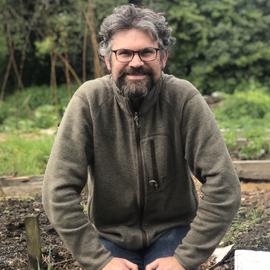
Jeremy Kidwell
Associate Professor in Philosophical Theology and Theological Ethics
Ethicist, activist, hacker, ethnographer and eco-theologian. Interdisciplinary and unafraid.